Showing posts with label air cargo. Show all posts

Monday, 14 September 2015

What air cargo can tell us about the global economy

Every now and then, a news article reminds us that air cargo is, or has been, considered a bellwether of the state of the global economy. As the Wall Street Journal recently explained, in an article on the stumbling Chinese economy:

“Air cargo is widely tracked as a leading indicator for trade because shippers deciding whether to send items by plane are often swayed by last-minute economic developments. The recent drop in volumes has analysts concerned, even as maritime shipping out of Asia has remained healthy.”

This follows a stagnant couple of months in the air cargo market, where volume grew only 0.7% in July—the lowest of the year. A drop in air cargo traffic to and from China is specifically viewed as evidence that the economy is wobbling, in the wake of the Chinese government devaluing the yuan in order to reinvigorate exports. This was followed by plummeting Chinese stock markets and worldwide drops in share prices.


In the same way that Chinese exports have an impact on the overall volume of global air freight, so too does the Chinese economy affect the global economy—and one is often a good indication of the other. So when economists aren't seeing growth in air cargo, it could very well be a symptom of a larger problem.

Freightfully important


Part of this connection is because air freight is itself a huge facilitator of global trade. According to the International Air Transport Association (IATA), over US$6.4 trillion worth of goods—approximately 35% of world trade by value—is transported by air cargo. This is because air cargo supply chains make it possible to deliver high quality goods efficiently and at relatively economical prices.

The IATA is also quick to point out that air cargo creates millions of jobs, as well as being a vital component in the implementation of worldwide health and immunisation programmes, not to mention disaster aid.


As such, air freight is viewed as a reliable indicator of economic changes not merely because it reflects the ebbs and flows of the economy, but because it plays its own massive role in global trade.

So one way or the other, it makes sense for the analysts to keep a close eye—and to worry a little at signs of stagnation, even when there may be growth in other areas like sea freight.

Transglobal Express offers worldwide freight forwarding with all major carriers. To keep up to date with air freight industry news, follow our news and updates

(Image credits: John Murphy, Robert Stanklewicz under a Creative Commons 2.0 license.)

Friday, 21 November 2014

Airports Commission consult over additional runways at Heathrow and Gatwick

Airports Commission consultants have said Heathrow Airport would be an appropriate location for a new runway in the South East of England for air freight growth. The UK government’s Airports Commission released a public announcement consisting of three new proposals, with two being directed at Heathrow Airport, and the third for Gatwick Airport. All proposals suggest additional runways for both airports.

The proposals explains how Heathrow is a well-established airport and “the industry would be well placed to respond quickly to a growth in capacity.” 2013 saw Heathrow handle 1.4 million tonnes of air freight in comparison to the 98,000 that Gatwick handled the same year.

The proposal also advises that significant growth would require investment from third parties around the airport itself. Alastair McDermid, Gatwick’s Director of Airports Commission, has said: “We acknowledge there is a well-established airfreight industry in and around Heathrow. Accepting Heathrow have got a head start, we still have a lot to offer.”

McDermid also spoke of Gatwick’s ability to offer custom built facilities, reduced charges for carriers and additional benefits including reduced congestion in and around the airport. The Director of Airports Commission also said: “The forecast is to grow airfreight to 1.1 million tonnes and we have allocated enough land for that to happen.”

Speaking on behalf of Heathrow Airport, Airports Commission Chairman, Sir Howard Davies, has said: “We have not yet take a view on which proposal strikes the most effective balance between the assessment criteria.”

Heathrow also commented: “We welcome the Airports Commission’s agreement that Heathrow is well placed to enhance the UK’s freight operations. Expansion at Heathrow would enable us to develop our cargo facilities to double the throughput we have today.”

Tuesday, 21 October 2014

Aurora Air International to return after 20 year absence

Cargo airline Aurora Air International has re-entered the airfreight market business after a 20 year hiatus. Having had its operations deactivated in 1995, the opportunity has risen for the company to re-enter the air cargo market.

The airline company has established its new headquarters at MidAmerica St Louis Airport and expects its first flights to take off during the second quarter of 2015.

The airline is due to operate a fleet of Boeing DC-10 for its Latin American and Asian routes. It is to specialise in the perishables and pharmaceuticals trade.

The decision to base the company at MidAmerica is a result of Aurora Air Cargo recognising the airport and its operations as a "key step" in plans to open up Latin American and Asian trade routes which will offer "unique support for perishable suppliers from the mid-West US."

Aurora president, Carlos Smith, has said: "As airplanes start to operate out of MidAmerica a new and secure chain will be available for mid-West product shippers to and from Asia and Latin America with less handling and ground movement than is available today." Smith continued: "Asia and Latin American shippers will enjoy this route as their goods, especially perishables, are not double and triple handled in the USA en route."

Monday, 18 August 2014

IATA report 2013 as a 'weak' year for airfreight

The International Air Transport Association (IATA) has reported airfreight saw a weak growth during 2013, with only 1.8% more volumes overall compared to the previous year. The trend is a possible reflection of on-shoring, where manufacturing is kept close to its market. Domestic freight tonnes carried and freight and mail tonne kilometres both saw domestic growth overtake international increases.

The amount of tonnes carried increased by 3.4% domestically, however internationally the increase was a sheer 1.3%. Freight and mail tonne kilometres rose by 2.9% domestically, while international traffic saw a rise of 1.6%. Despite the slight increases, IATA's Director General and Chief Executive Officer, Tony Tyler, has said that 2013 saw "48 million tonnes of cargo...carried on about 100,000 flights a day."

Statistics also reported the decreases in the average price of jet fuel, brining it down by 3.9% in 2013 compared to 2012, however this year has seen a slight rise in jet fuel prices again.

According to the World Air Transport Statistics, the top 10 airlines for tonnes carried were; Asiana Airlines, Lufthansa, Qatar Airways, Singapore Airlines, China Airlines, Cathay Pacific Airways, Korean Air, United Parcel Service, Federal Express, with Emirates being the number one.

Thursday, 19 June 2014

IATA welcome Glyn Hughes as global Head of Cargo

The International Air Transport Association (IATA) has recently announced Glyn Hughes as its next global Head of Cargo. Hughes is no stranger to the company, having joined IATA in 1991 to assist in helping expand and develop the cargo accounts settlement service. Hughes helped the service grow from 35 to nearly 100 operations, whilst also maintaining extremely low levels of agency default and reducing the overall operating costs for its members.
IATA's new Head of Cargo, Glyn Hughes
Hughes has also led IATA Cargo's initiatives over recent years, becoming involved with industry management and relationship building. He has also been part of the global air cargo advisory group steering committee, in additional to leading a campaign to promote the value and use of air cargo.

IATA's Director General and Chief Executive Officer, Tony Tyler, has commented on Hughes' movement within the company: "I am delighted that Glyn has agreed to become our new hard of cargo. He has worked very closely with [former Cargo Head] Dan Vertannes these past four years and is well placed to continue the important work."

Tyler proceeded to advise that "air cargo faces considerable challenges" and that the company has an "ambitious goal to improve the industry's competitiveness." Tyler believes Glyn's addition will ensure focus is "dedicated to that goal", in additional to delivering the industry priorities, which include safety, security, quality, modernisation and transformation through the e-cargo agenda.

Hughes began his new duties recently by speaking at IATA's 70th annual general meeting in Doha. Hughes presented in regards to the air cargo industry, speaking on three key areas, these being: safety, security and modal competitiveness.

Monday, 4 November 2013

Etihad Cargo reports Q3 growth of 41%

Continuing its recorded growth throughout 2013, Etihad Cargo, the freight division of UAE's national airline Etihad Airways, has recorded a significant surge in volume for the third quarter. The Abu Dhabi-based carrier moved 132,448 tonnes of freight from July-September - a year-on-year increase of 41% compared to 2012.

Freighter side shot
An Etihad freighter craft
Revenue did not lag far behind volume in terms of performance: the carrier saw year-on-year sales increase by 39% to $244 million. Chief Executive Officer of Etihad Cargo James Hogan commented that the growth "occurred in a climate of increasing capacity and ongoing price competition. It also compensated for the reduced travel during the holy month of Ramadan". 

Taking the year-to-date volume and revenue figures as a whole, cargo handled is up 30% and revenue up 26% compared to 2012. Etihad's success is one illustration of how, in what is globally a challenging time for air freight, the Middle Eastern region is one of the few markets experiencing growth. 

Wednesday, 18 September 2013

IATA urges more cooperation between Eastern Europe and Aviation leaders

Addressing delegates at the IATA Aviation Day Eastern Europe conference which opened in Bucharest last week, IATA's CEO Tony Tyler urged greater cooperation between Eastern European governments and aviation industry stakeholders: “Aviation connectivity can play a key role in the economic success of Eastern Europe. But in order to achieve these benefits, the region will need to tackle some long-standing problems which hamper competitiveness and innovation,” he said.


Tyler named the environment, passenger rights and infrastructure as three areas where governments should embrace innovation. Firstly, for the industry to achieve carbon neutral growth by 2020, cooperation from governments would be required, he said. On the issue of passenger rights, Tyler focussed mainly on competition and the need for governments to take responsibility for protecting consumers by ensuring service standards are maintained and regulated. Finally, when addressing the topic of infrastructure, Tyler highlighted that the most pressing issue was the Single European Sky and emphasised that the lack of political will to push states to unify European airpace is costing the continent EUR5 billion annually.

Source: IATA

Thursday, 25 July 2013

Heathrow Expansion will benefit Air Cargo

Several proposals to improve the capacity of UK airports are currently vying for supremacy. Most representatives of the air cargo industry advocate the expansion of Heathrow while the Mayor of London has submitted three different schemes. The Davies Commission, an independent body headed by Sir Howard Davies, has been tasked with determining the best way to meet Britain's future airport needs. 

Visitors welcome to Heathrow T5
Heathrow Airport has submitted three runway location options to the Commission, any of which it says could produce a direct air cargo benefit of £2 billion to £3 billion. It is estimated that a third runway at Heathrow would cost between £14.3 and £17.6 billion and provide between £50 and £156 billion in UK economic benefits after opening in 2025. 


Johnson's proposals comprise a four runway airport  on an artificial island in the Thames Estuary, a similar development on the isle of Grain on the south side of river Kent and an expansion of Stanstead Airport, in the north-east of London. He has made grander claims about his options, saying that they could provide 375,000 new jobs and add £742 billion to the value of goods and services produced in the UK. But Heathrow has retorted that a new Thames Estuary airport would not be operational before 2034 and could cost £70 to £80 billion, over a third of which would come from the tax payer.

Mayor of London Boris Johnson proposes to close the main
air hub at Heathrow
In support of expanding Heathrow rather than either of the London Mayor's options, the airport has claimed that 202 of the UK's top corporations are headquartered within a 25-mile radius of Heathrow, and that expanding the airport would protect 114,000 local jobs and create 70,000 to 150,000 more.


Corin Taylor, senior economic advisor for the UK's institute of Directors, supports the third Heathrow runway proposal. He said, "Expanding Heathrow is the best way to solve Britain's airport capacity conundrum. It is quicker and cheaper than the other options... Britain will miss out on the trade we need with high growth parts of the world unless we urgently expand our hub capacity". 

The Freight Transport Association has stated that Heathrow is "the best case for a London hub airport" expressing its disappointment that the importance of air cargo remains underplayed in the debate.

Source: Air Cargo Week


Friday, 12 July 2013

European Air Cargo manages a 1% rise in May, in a sluggish month for the industry

IATA have recently released figures reporting on the global air cargo market growth for May: broadly speaking, the market has continued to flatline, following the trend of the last 18 months. Global freight tonne kilometres increased slightly by 0.8% year-on-year, and while capacity increased by 2.1%, load factors fell to 44.9%, the lowest level since post-crisis recovery.

The sluggishness in the market has been attributed to a variety of factors including the decelerated growth in developing economies such as China China and the global decline of business confidence. Tony Tyler, Director General and CEO of IATA, said, “It is getting harder to find optimistic signs for air cargo growth. The Middle East remains a bright spot, and the rate of decline in the Eurozone is easing. But this is offset by the weakening of expansion in Asia-Pacific. It is now clear that the positive global upswing in air cargo at the end of 2012 was an illusion. Air cargo, along with many parts of the world economy, appears to be in suspended animation at the moment”. 

The Middle East region saw the most growth, with a year-on-year increase of 9.7%, Europe was second in line with the much lower figures of 1% growth, followed by Africa at just 0.2%. All other regions, comprising Latin America, North America and Asia Pacific, registered slight declines. 

Tuesday, 4 June 2013

Now is a critical time for air freight, says FedEx chief.

Michael Ducker, the COO of US courier service FedEx Express, stressed the importance of air cargo at the Cargo Network Service (CNS) conference in Phoenix last month.  During his keynote address, Ducker stated that "right now is definitely a critical time for cargo".

    FedEx Express COO Michael Ducker
2012 saw air freight contribute $98 billion to the global economy and fly $US 10 trillion goods internationally, but Ducker called it a disappointing year, given that cargo volumes and yield dropped 2% year  on year. 

In line with many industry commentators who have borne witness to small dips in growth in the industry since 2008, Ducker affirmed that the days of cheap fuel and high investment are over for the foreseeable future: "a new normal" has permeated the industry, he said. Financial stagnation and high oil prices are the primary factors defining the current market. 

At the same time, US markets are seeing increased competition from the emerging markets of China, Brazil and Poland as well as competition from sea carriers. Ducker stated, "I think the future of air cargo is directly tied to ocean freight, but sea freight isn't for everyone." Shippers of time-sensitive, high value goods will always depend on air freight, he stressed.

In order to face the challenges of the future, Ducker urged greater supply chain innovation and efficiency and the quicker adoption of e-freight, calling paper-based processes relics and anachronisms.

Thursday, 30 May 2013

East Asian air cargo suffers from weak demand

Recently published performance figures for Cathay Pacific - the flag carrier of Hong Kong - and China Airlines and EVA Airways - the two largest carriers of Taiwan - indicate that the air cargo slump is set to continue.


123,805 tonnes of cargo and mail were carried by Cathay Pacific and Dragonair in April,  a year-on-year decrease of 0.6%. Capacity grew by 1.5% but cargo and mail revenue tonne kilometres fell 2.4%. China Airlines also registered a 1.65 percent drop in accumulated sales figures for the first 4 months of 2013 compared to 2012. EVA Airways, Taiwan's second largest carrier, saw a 3.35 percent drop in revenue. 

Cathay Pacific's CEO John Slosar remains positive about his company's adaptability. In an interview with Air Cargo Week, he stated, "We didn't anticipate the markets being down for such an extended period, and we have had to be nimble and flexible in our response, cutting back freighter capacity in line with demand at the same time as trying to develop new markets. Our cargo teams have been doing a great job in this regard. We have adapted well to the short-term challenges and at the same time have been looking to the future".

Nevertheless, Slosar's optimism about the future for the air cargo industry is quelled by his doubts about the global economy as a whole. He commented, "[The industry] has been in a slump for more than two years now- an unprecedented length of time - and there is still no indication that things are about to change for the better. There are few positive signs of the world's economy getting back on a firmer footing and the simple fact is that cargo demand won't see any sustained uptick until that happens."

Monday, 13 May 2013

Middle East sees 10.5% air cargo growth, amidst a slow month for other regions

IATA (the International Air Transport Association) recently published their market analysis for March. Air freight markets weakened during this last month of the first quarter, suggesting that growth rates noted at the end of 2012 have stalled. International markets as a whole saw reductions in both actual freight tonnage (-2.1%) and capacity (-0.3%); but in spite of this slump, the Middle East and Africa saw a growth in traffic, with the former region seeing an increase of a remarkable 10.5%.


African cargo grew by a more modest 3.2%, while every other region saw a fall in traffic of between 0.8% (Latin America) and 5.2% (North America). While the Asia- Pacific region saw a fall of a less dramatic 3.3.%, since this region accounts for 38.5% of the market, the area saw the biggest drop in actual freight volumes. The European market was also flagging, with a traffic reduction of 4%.

Compared to the economic nadir of October 2012, global air freight volumes were up 1.5%. In spite of this relatively low growth, Tony Tyler, IATA’s Director General and CEO commented: “The March decline in air cargo is most likely a temporary stall. The fundamentals for a sustained improvement in air cargo volumes are in place. Business confidence continues to signal forthcoming expansion, and the solid increase in new export orders seen in 2013 should boost air freight in the coming months." 

Speaking of region-specific performance, Tyler said:  "Much of the current weakness is coming from Asia-Pacific airlines. While the region is economically strong, the economies of its trading partners are not. The Eurozone is showing renewed weakness and the negative impact of US budget cuts is yet to be fully measured”. 

Clearly, the air cargo sector is by no means immune to the vicissitudes of the global economic crisis. Perhaps Matthew Mariott, commercial director of Hellmann Worldwide logistics UK, was correct in stating that the way forward for the industry is low yet sustainable growth.  

Source: IATA

Friday, 26 April 2013

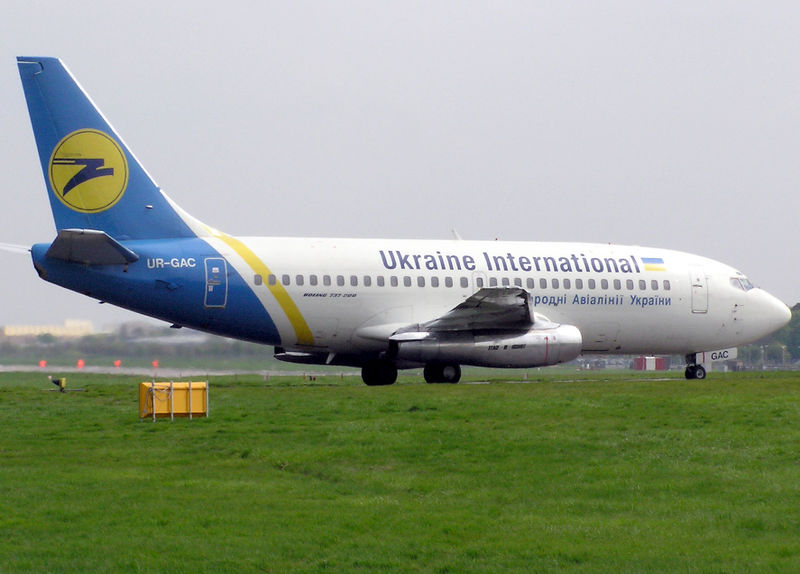
Swissport versus Ukraine International Airlines

Swissport International's loss of Swissport Ukraine to Ukraine's flag carrier Ukranian International Airlines  has caused commotion and consternation in the aviation industry and media. Following a court ruling in Kiev on 27th March, the Swiss company was compelled to transfer its 70% stake in Swissport Ukraine to UIA at a fraction of its estimated worth.

Many have agreed with Swissport that these events constitute a "successful hostile raider" on the part of UIA and Kiev City Economic Court. Air Cargo Week labelled the court ruling "a shocking display of flawed and questionable legality." Unsurprisingly, news sources from within the Ukraine tend to adopt a different perspective, reporting UIA majority shareholder Aron Mayberg's comments that Swissport have behaved aggressively throughout the process. Here, we provide an overview of the topic on the lips of everyone in the aviation industry.

File:Ukraine.b737-200.ur-gac.arp.jpg
UIA and Swissport entered into partnership in March 2006 - when UIA was still state controlled -  in order to develop its passenger handling business. The recent dispute arose from UIA's complaints that Swissport were "depriving UIA of the right to participate in the management of the common business and tried to unilaterally dilute the share of UIA," accusations which Swissport deny.

Swissport claims the dispute arose from its desire to invest further to be able to cope with the double-digit growth in the country. When UIA declined, Swissport suggested it put up the full investment amount and dilute UIA’s shareholding in exchange. But Mark Skinner, Senior Vice President of Swissport groundhandling commented. “The decision had not been finalised and was due to be discussed in the next shareholders’ meeting. We were very surprised when UIA took us to court, and even more surprised when the court ruled against us.”

And what a ruling it was. After six separate hearings, Swissport was ordered to sell its 70% of Swissport Ukraine to UIA for $433,000 on 27th March. The business is estimated to be worth $25 to $30 million, meaning Swissport have suffered a $17 to $20 million loss as a result.

The Swiss company issued a press release on the 30th March condemning the ruling and refusing any future liabilities for Swissport Ukraine. Swissport appealed to the highest court in the Ukraine and reported the incident to the President and Vice President of the European Commission on 16th April. For its part, UIA condemned Swissport for disconnecting UIA from their passenger servicing system and IT systems on the  19th April.

Skinner initially declared: “We have appealed to the highest court in the Ukraine. We are going to fight to the end [...]We are 100 per cent convinced that Swissport is right and Ukraine International, along with its shareholders, are committing a crime and they have taken over our shares in an unfriendly way.” Nevertheless, after exhausting legal appeals within Ukraine, Swissport's attitude was much more muted in a statement by a spokesperson from the company early this week: "We see potential in the Ukraine but we have been burnt. Before we move we will need to carefully screen our partners for co-operation"

The story is ongoing.


Tuesday, 23 April 2013

Dulles Airport expects cargo growth in 2013


In spite of an 11% decrease in freight tonnage in 2012, Washsington Dulles International Airport is anticipating a growth in air cargo this year. 

File:Washington Dulles International Airport at Dusk.jpg
Washginton Dulles International Airport at dusk (image c/o Joe Ravi)

Joseph Maly – head of air cargo development at the Metropolitan Washington Airports Authority – explained that although tonnage fell last year, occupancy actually increased, and while the airport could not remain untouched by the global economic slump of 2012, he remains positive about the future. He commented, “With a highly diversified and expanding network of international flights and strong belly cargo facilities, Dulles is well-positioned for success.”

Much of Maly’s optimism surely derives from plans and opportunities for development in Washington DC. which will affect the airport directly. There are currently several road improvements expected in the US capital including a north-south highway which would increase the capacity of road feeder services.  Additionally, the airport comprises in excess of 820 acres of undeveloped land, making it less congested and with more opportunities for future development than many of the airports on the American East Coast. 

Network expansion will also be key to the airport's freight growth: Dulles has strengthened its links with the Middle East recently, and now offers daily routes to the region with five different airlines. New routes to Dulles with Brussels Airlines will be launched in June. 

Pharmaceuticals, perishables and satellite and telecommunications equipment are tipped as key items to be seen on import and export to and from DC this year and Maly is keen to keep the volumes of such goods high, given the importance of air cargo to DC's economy. The industry, he states, supports more than $600 million in labour income each year.

Source: Air Cargo Week 

Thursday, 18 April 2013

DHL to offer training in advance of new EU Air Freight security regulations

DHL Global Forwarding, the freight division of German logistics giant Deutsche Post DHL, announced this afternoon that it is offering a range of services to its customers to help them comply with new EU Air Cargo Security Regulations. 

The regulations were introduced after two parcels containing explosive devices were intercepted while being transported via air cargo towards intended US destinations. The new rules have been in place since 1 February 2012 and will come into full effect on 29th April 2013, when the transition period comes to an end. They require air cargo companies to ensure that all cargo and mail destined for the EU is screened or comes from a secure supply chain.

DHL have predicted that only five percent of 65,000 air freight companies will have met the required standards by the end of the month, which could result in delays in the transportation of air freight. In order to avoid this, DHL claim, they are offering courses, workshops and a contractable X-ray screening service using newly sourced equipment.


Sources: DHL, IATA

Monday, 15 April 2013

Capitalising on developing markets is essential for the future of air cargo, says Air Atlanta spokesperson

Baldvin Mar Hermannson, vice president of sales and marketing at the Iclelandic ACMI provider Air Atlanta, has expressed concerns about current surplus capacity on the air cargo market in Europe and has pointed to expansion into the Middle East and Africa as a possible solution.

In an interview with Air Cargo Week today, Hermannson stated, "Saudi Arabia is [...] a big market for us, but Africa is promising too. We have a lot of business in Lagos, Nigeria and [...] we hope to announce the arrival of a further African carrier soon."

File:Air Atlanta Icelandic 747-243BSF.jpg
An Air Atlantic 747-200

While logistics giant FedEx has recently expanded its networks in Latin America as part of the growth strategy for its freight division, Hermannson admits that for smaller, European countries, the South American market could be a hard nut to crack.

Hermannson added, "demand in and out of Europe will play a pivotal role this year. And as I previously stated, capacity will outweight demand."

Not every corner of Iceland's freight sector is threatened by overcapacity however. Robert Tommasson, MD of Cargo Express has commented this week that insufficient capacity, particularly on US routes, has impeded growth of Iceland's air freight markets, particularly in September-April when the seafood industry, the main driver of air cargo, is at its busiest. 


Source: Air Cargo Week 

Thursday, 11 April 2013

Low and sustainable growth is the way forward for air cargo, claims UK logistics director

Speaking to Air Cargo week this Monday, Matthew Marriott, commercial director of Hellmann Worldwide logistics UK, stated that leaders in the world cargo industry must recognise that the state of the economy may be here to stay.

According to Mariott, rather than looking for quick wins and short-lived peaks in demand, the industry should be “accepting low growth, and consolidating the internal business structure that makes boom-and-bust economics less likely” in order to regain market confidence.

Marriott pointed to manufacturers and exporters taking advantage of currency fluctuations as partly responsible for the “sudden dips and false dawns” in the economy since 2008. He commented: “On the face of it, this all sounds fine […] but, within a struggling or depressed sector, this approach can hinder recovery”.

The logistics director’s comments come at a time when other industry experts are claiming that sea freight is becoming a stronger competitor to air freight as a means of transporting goods worldwide.

Market analysis company Analytiqa reported today that demand for sea freight has risen since International Economic Indicators suggested that the world economy bottomed out in the third quarter of last year. 

While air cargo demand has not reflected this recovery to the same extent, volumes were still up by 2% in February compared to the previous year. Moderate growth for the sector is forecast across the course of the year but IATA has warned that improvements cannot be taken for granted.

Sources: Air Cargo Week, Analytiqa

Do you use freight services? View our very competitive rates and get an air freight or sea freight quote with Transglobal Express now!

Friday, 14 September 2012

Air Cargo Germany branches out to Asia and South America


Starting next month, Air Cargo Germany is going to continue with its weekly service to Beijing Capital International Airport in China. 

Image c/o ACW

The air cargo company already transports goods to Shanghai – a service which will soon by complemented with three weekly flights to Beijing.

In order to prepare itself for the expansion of its flight routes, Air Cargo Germany is going to acquire two Boeing 747-400 extended-range freighters which will handle a maximum payload of 120 tonnes.

Plans to branch out to Mexico City, Chicago as well as to Moscow and Frankfurt are also in the pipeline as CEO Michael Boc of ACG confirmed:
“South America is standing on our agenda, too, but will be materialised only in the near future. (…) We’ve signed an interline agreement with ABC for enabling easy transfers of shipments in Moscow and Frankfurt.”

Source: aircargoworld.com

Tuesday, 4 September 2012

International Air Freight Market Remains Low // Travel Grows


The international air freight market continues to decline as recently confirmed by the Assn. of Asia Pacific Airlines (AAPA). Weak export markets forced a decline of 5.1% FTKs in July alone with freight capacities dramatically decreasing by 5%.  

International passenger traffic, however, grew by an impressive 3.2% RPKs especially on short regional routes with seat capacities increasing by 3.5%. One of Asia’s major airlines, Asia-Pacific, reported an international passenger capacity number of 18.5 million for July 2012.
AAPA DG Andrew Herman said that “Asia-Pacific airlines registered an impressive 8.1% increase in the number of international passengers carried during the first seven months of the year. (…) However, international air cargo demand fell by 4.4% during the same period”.
The current international air freight load factor remains low with an average of 67.2%.


Sources: atwonline.com / thehandyshippinguide.com