Showing posts with label FedEx. Show all posts

Wednesday, 23 December 2015

Christmas is almost here. How are couriers coping with the last-minute demand this year?

In 2013, international couriers UPS and FedEx hit the news when they struggled to cope with seasonal demands, leading to millions of delayed parcel deliveries and a lot of angry customers.

Much of the blame was levelled at online retailers, who had heavily encouraged last-minute shopping—including Amazon, who promised Christmas delivery for orders placed as late as 11pm on December 23rd.


Last year things got better, but there was still room for improvement. So how have UPS and FedEx been attempting to cope with demand this year?

Temporary workers


UPS had added 55,000 temporary workers in 2013; FedEx, 25,000. In 2015, UPS recruited a staggering 95,000 seasonal workers, while FedEx upped their recruitment to 55,000.

Free shipping day


Many major retailers declared December 18th 'Free Shipping Day', waiving shipping fees on all online orders. Encouraged to do this by UPS and FedEx, the aim was to get customers to do their shopping earlier on to avoid the bottleneck immediately before Christmas.


Sophisticated technology


UPS is using a smart routing technology called Orion to manage up to 70% of the company's delivery routes within the U.S. The algorithmic technology analyses over 200,000 options for each 120-stop route, then selects the most efficient one. UPS saved up to 6-8 miles per route last year using this technology.

FedEx are using six-sided “scanning tunnels”, which can track weight and dimensions, make sorting decisions, and reduce human input and error.

Large scale operation


Worldport, UPS' sorting hub in Louiseville, Kentucky, has 155 miles' worth of conveyor belts. The facility is the size of 90 American football fields, and a plane lands every 60 seconds to unload goods.

UPS has 38,000 containers that hold 400 packages apiece, which are rolled across the floor and onto planes. 416,000 packages are signed every hour. It takes a package 13 minutes to make its way through the facility.

UPS expects to deliver 630 million packages overall this year.


So how will it go? We'll find out over the next day or two. It's a huge operation for both UPS and FedEx, but they seem to be pulling out all of the stops to deal with Christmas demand.

Sending a parcel with Transglobal Express? Stay apprised of our Christmas schedule.

Friday, 18 September 2015

How Cecil the lion is changing airline policy

When Cecil the lion was killed by an American big-game hunter in Zimbabwe in July, the controversy made big waves. As outrage gained momentum on social media, conservation organisations rallied, high-level government officials spoke out, and even late-night chat show hosts made pleas for charity donations on his behalf.

The repercussions of the incident have also been felt by the courier industry, with petitions being sent out to carriers asking for a ban on the transportation of big-game hunting trophies, as a way of trying to deny hunters their prizes.


Last month, Delta Air Lines, American Airlines and Air Canada—the big North American airlines—joined a long list of companies who have opted to go ahead with the trophy ban. They are not required by international law, but are doing so seemingly on ethical grounds. They now prohibit the transportation of the "big five": lion, leopard, elephant, rhinoceros and buffalo.

Animal cargo - what are the rules?


The International Air Transport Association (IATA) abides by the Live Animals Regulations (LAR) as a global standard for live animal cargo. For carriers, live animals are usually either a prohibited or a restricted item.

UPS is one company that will transport some live animals, but not obviously dangerous animals, such as those that are poisonous or venomous, or pests such as locusts and mosquitoes. Live bees, strangely enough, can be transported as long as they come with the right packaging.

Endangered or threatened animals are protected under the what-it-says-on-the-tin Convention on International Trade in Endangered Species of Wild Fauna and Flora (CITES) from 1975, which requires a CITES permit for the transportation of endangered species. But most carriers, including UPS, outright refuse to transport endangered species.

A matter of opinion?


Hunting trophies are a different matter. Airlines are not obligated by international law to prohibit the transport of hunting trophies, even of endangered species. The actual hunting of endangered animals often requires a permit, but can be done legally, and current U.S. law permits the importation of all "big five" animals.


UPS and FedEx are two companies who have not followed the new trend of banning hunting trophies, both stating that they comply with international and U.S. law. UPS' public relations director, Susan Rosenberg, has said that, beyond the law, the ethics of transporting hunting trophies is a matter of opinion and that UPS avoids making judgements.

What do you think? Should all carriers ban hunting trophies? Or should they keep a more hands-off approach?

Transglobal Express is an international freight forwarder. Visit our website for a quote and get great discounts on all major carriers for air freight, sea freight and door-do-door parcel delivery—lions not permitted.

(Image credits: Joe Ross, jude_the_obscure, under a Creative Commons 2.0 license.)

Tuesday, 8 September 2015

FedEx bids for TNT - market control or fair play?

Last month, delivery titan FedEx made a bid to acquire rival company TNT, with an offer of $4.8 billion. As a result, the European Commission launched an investigation to determine if FedEx would violate regulations by dominating the market—specifically, the delivery of small packages in some European countries.

So why does FedEx's domination of the European market matter to the Commission?

Healthy competition


The principle behind the regulations of the European Commission is one of healthy competition. FedEx and TNT are two of four giant global delivery companies—the other two are UPS and DHL. If FedEx acquire TNT, the concern is that they will become too powerful and risk controlling too much of the market.


In 2012, UPS made a similar bid, attempting to purchase TNT for $6.8 billion. Antitrust regulators rebuffed this attempt because it risked ‘duopoly'. This is because at the time DHL was considered the only viable competition.

Is it really an issue?


FedEx insists that it's not the same situation as last time. They say they don't have a large market share in Europe, and therefore they won't disrupt market dynamics with the acquisition. Currently their market share in Europe is only 5%, one of the smallest, while TNT's is third place with 12%, after DHL and UPS. If the deal is made, the FedEx-TNT merger would put them in second place.

Some industry experts, such as Roger Sumner-Rivers of ParcelHero, who spoke to Forbes, believe that the merger will actually result in stronger competition in Europe and around the globe. The idea is that as TNT will make up for FedEx's weakness in Europe, while FedEx will bolster TNT's less strong American network.


This is different from the proposed UPS-TNT merger, where UPS already had a strong European presence and would have bagged 30% of the market.

To be continued...


FedEx's offer expires at the end of October. Pending regulatory approval, the transaction would be made in the first half of 2016. The EU will make their decision by mid-January—an extension of the original timescale.

We'll be keeping up with news of the merger. To stay apprised, you can follow industry updates on the Transglobal website.

(Image credits: BriYZZ, EDDIE under a Creative Commons 2.0 license.)

Monday, 18 May 2015

FedEx provides aid to support relief of Nepal earthquake disaster

FedEx Corp. has provided approximately $1 million in cash, transportation support and a chartered flight to deliver medical aid and supplies to Nepal in the aftermath of the recent devastating earthquake. The American courier has provided a disaster relief program through its existing relationships with companies such as Heart to Heart International, American Red Cross and The Salvation Army.

Fredrick W. Smith, Chairman and CEO of FedEx Corp. said: "FedEx is committed to responding to the aftermath of the earthquake in Nepal. Working together with international relief organisations, we are utilizing our global transportation network to assist in this massive recovery effort."

FedEx sponsored Heart to Heart International who provide mobile medical clinics containing tents, vital medicines, medical supplies and portable medical equipment for those affected by the disaster. The Memphis-based courier company also presented The Salvation Army with a $50,000 cash donation.

Thomas Tighe, President and CEO of Direct Relief, commented: "In response to enormous human tragedy in Nepal, Direct Relief is working to ensure that more lives are not put at risk by providing emergency medical aid to the country's Ministry of Health and to local partners we have worked with for several years." Tighe continued: "The extraordinary step FedEx has taken...and its amazing team...is a powerful force-multiplier to the humanitarian effort underway."

Friday, 25 April 2014

FedEx entrusted with the delivery of T-Rex skeleton

A subsidiary of FedEx Corp., FedEx Custom Critical, has successfully carried out the safe transportation of a rare Tyrannosaurus Rex skeleton. The fragile skeleton has travelled from the Museum of Rockies in Bozeman, Montana, to the Smithsonian National Museum of Natural History, located in Washington, D.C.

The fossil, being 65 million years old, is due to be on display at the Smithsonian National Museum of Natural History for the next 50 years, as per the terms of its loan with the museum. The skeleton will be the new centrepiece of the dinosaur hall, where it is expected to receive approximately 7 million views annually. Measuring at 38 feet in length and weighing a hefty seven tonnes, the skeleton has been branded "The Nation's T-Rex."

The impressive skeleton travelled from Montana to Washington D.C. within a specially-branded FedEx Custom Critical truck. The trusted truck was driven by a husband and wife team, with the vehicle being equipped with the most recent and advanced technology. Such technology included a GPS system which was programmed with the preferred route. 

The specially designed FedEx truck which transported the
skeleton to the museum in Washington D.C.
The journey of the ancient fossil took a total of 4 days, during which time thorough monitoring was providing. A new proactive system was implemented to help with the successful journey of the skeleton. FedEx were able to oversee the shipment and monitor specifics, such as the temperature, humidity and light exposure whilst it was in transit.

CEO of FedEx Custom Critical, Virginia Albanese, has said: "FedEx Custom Critical has the experience and expertise in delivering some of the world's most precious cargo, and this unique shipment showcases our ability to once again create a perfectly tailored solution for our customer. We are thrilled to have collaborated with the Smithsonian to deliver such an important piece of history to our nation's capital."

The first ever bone of the T-Rex has found by rancher Kathy Wankel in 1988 in the Fort Peck Reservoir. Due to the finding, a specialist team carried out an intense investigation around the surrounding areas. The search resulted in the discovery of 80% of the dinosaur's skeleton, which is considered one of the most preserved and well kept specimens known.

Monday, 7 April 2014

Expansion sees FedEx Express open four new stations in Spain

FedEx Express is due to open four new stations, three to be situated within the Basque region of Spain with the fourth being on the south-east coast in Alicante. The European expansion will increase movement within their Spanish network, creating approximately 32 new job roles throughout the additional stations. This growth will expand on the 90 new stations FedEx has already positioned within Europe.

The courier company has said the Basque country is depicted as one of the most constantly developing areas of Spain with regards to business interest. There are around 158,000 businesses positioned in this area, in places such as San Sebastian and Vitoria. The expanding network will give customers within this area the opportunity to ship worldwide with expected transit times of one or two working days.

FedEx Express are due to create job opportunities in their
expansion plans.
There is now a demand in the export market for local businesses since the Spanish economy has started to recover. FedEx can see this increasing demand, seeing that the Basque region reached 13.8 billion Euros last year, a 5.4% increase from the previous year. FedEx Express began operating with Spain back in 1989 and now has employed approximately 445 people there. With their local headquarters based in Madrid, FedEx has a gateway at Barajas Airport which links to its main European hub at Paris’ Charles de Gaulle Airport.

FedEx will be creating 12 new jobs within their Alicante station where more than 129,000 businesses are currently based. Businesses based in this area are in industries such as textiles, shoe, marble and toy manufacturing. Within the first eight months of 2013, exports from this particular area were said to have been valued at a staggering three billion Euros.

Senior Manager of Operations for FedEx Express Spain, Ian Silverton, has spoken of how the company will be offering its expertise to local Spanish businesses: “Now we are even better placed to give our customers the local expertise they need to go grow their businesses globally.”


Silverton has also commented on the advantages in opening stations in the Basque region and Alicante: “The Basque business community has made a name for itself for driving research and innovation, creating a thriving business community with a strong entrepreneurial spirit.” He also described Alicante as being “known for its strong industrial research and development.”

Friday, 21 March 2014

FedEx is ranked at 8th place in business magazine's "World's Most Admired Companies" list

Fortune, a popular business magazine, has recently published the results of a survey titled the “World’s Most Admired Companies”, with FedEx being ranked at number 8. The results of the survey portray a comprised list of the most prestigious and well thought of businesses.

Being featured in this list is not a first for FedEx, with the Memphis founded company having being highlighting on previous years editions. Since 2001, FedEx has been positioned among the top 20 companies as decided by Fortune magazine.
Fortune's edition including the "World's Most
Admired Companies" list

The survey takes into account nine separate characteristics and elements with regards to both financial performance and corporate reputation of companies when deciding the position of each within the list. Before arriving at their top 50, both Fortune, and consulting company, Hay Group is forced to eliminate from the starting from approximately 1,400 companies. After much elimination, the two deciders create an industry list of 57 companies. Analysis is given to rate the companies on nine separate criteria, from investment value to social responsibility. To make it successfully onto the list, a company must score within the top half of its industry.

To arrive to their top 50, the Hay Group asked approximately 3,800 respondents to choose the ten companies they admired and respected the most. The list at this stage is made up of the companies that ranked in the top 25% from the previous year’s survey.

The finalised list shows other similar parcel delivery companies, such as UPS, narrowly missing out, with them coming in at position 32. DHL did not make it into the top fifty, but can be seen as being considered for it.

FedEx Corp.’s Chairman, President and Chief Executive Officer, Fredrick W. Smith, has said: “We are honoured to be included on the Fortune World’s Most Admired Companies List. This recognition is possible because of our 300,000 team members who strive to make every FedEx experience outstanding.”

Wednesday, 25 September 2013

FedEx to take part in APEC CEO summit next month

FedEx executives will join business and government leaders in Bali, Indonesia  for the Asia Pacific Economic Conference (APEC) CEO summit on 5th-7th October. The high-profile event plays a major role in creating networks and increasing openness and integration among global trading partners and last year included keynote speeches from the leaders of China, Russia, Australia and Vietnam.

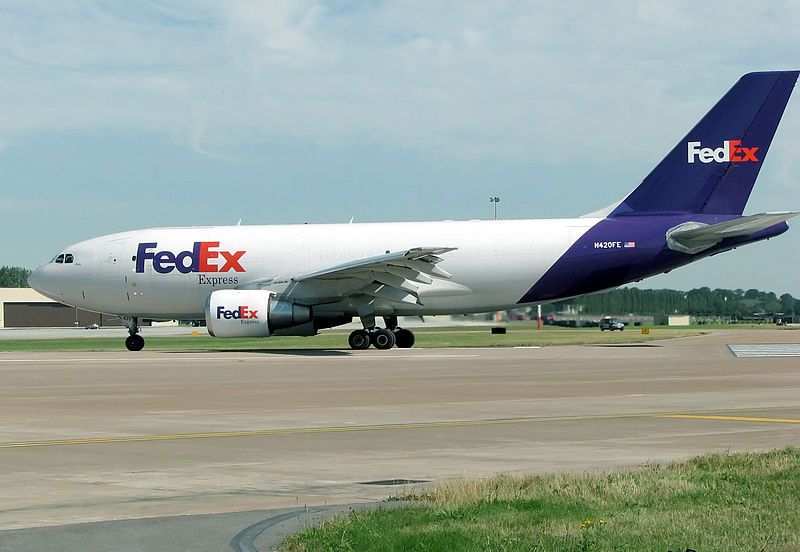
File:Fedex.a310-200.n420fe.arp.jpg

The theme of this year's conference is “Towards Resilience and Growth:  Reshaping Priorities for Global Economy,” and  Michael L. Ducker, Chief Operating Officer and President of International, FedEx Express, will participate in the summit dialogue session entitled ‘The State of the Global Trading System: Where To Next?' He commented: "FedEx has long been a strong supporter of facilitating global trade by lowering barriers to help markets grow and of making it easier for our customers to ship internationally. The APEC CEO Summit continues to be the leading forum for new ideas in trade facilitation among the world’s fastest growing economies, and FedEx is looking forward to progress in streamlining trade procedures worldwide.”  

Thursday, 19 September 2013

FedEx first quarter growth led by International Economy service

FedEx Corp reported a year-on-year improvement for the first quarter yesterday. Consolidated results showed a 2% increase in total revenue from $10.8 to $11 billion and a 7% rise in operating income from $742 million to $795 million. FedEx CEO Frederick Smith said overall growth in demand was the main cause of the company's recent success.


FedEx Express, the parcel delivery division and by far the largest part of the business, saw a slight 0.3% decrease in revenue from $6.63 to $6.61. This was attributed to lower fuel surcharge revenue and one fewer operating day. Nevertheless, operating income for the division was up 14%year-on-year from $207 to $236 million.  

While US domestic volume and revenue was flat, export volume grew 4% - with most of this coming from the lower end delivery services: FedEx International Economy grew 15% while FedEx International Priority saw a slight decline. 

Speaking of the results, CFO Alan Graf Jr. commented,“We remain confident in our full year earnings outlook despite tepid global economic growth. FedEx Express continued to execute on its profit improvement initiatives during our first quarter. We remain focused and are committed to FedEx Express achieving its $1.6 billion operating profit improvement target by the end of fiscal 2016.”

FedEx Ground, the division for day definite delivery across North America, reported an 11% increase in revenue from $2.46 to $2.73 billion, while the FedEx Freight Segment saw a relatively modest revenue increase of 2% from $1.4 to $21.42 billion. 


Friday, 13 September 2013

Transit times to Australia | How long will my parcel take to be delivered?

Not many nations are further from the UK than Australia (London is over 10,000 miles from Sidney as the crow flies!) but with a quality door-to-door courier service, your parcel can still reach its Australian destination in record time. The largest global courier companies such as UPS and DHL offer excellent transit times to Australia and with parcel delivery resellers such as Transglobal Express you can ensure you get quality services from big name carriers for a fraction of the price.

File:Sydney Opera House Sails.jpg

Transglobal Express offer a variety of discounted services from leading couriers including UPS, DHL, TNT and FedEx. You can compare the prices of each and pick the best one to suite your timescale and budget.   All major carriers offer Transit Times Calculator tools; if you know your collection and delivery address, you simply enter these into a quick form and you will see how long your parcel will take to be delivered depending on the service you select. With the UPS Expedited service, you can book a delivery to Australia this Friday morning, have it picked up this afternoon and delivered to Australia by Monday! If your parcel is less time-sensitive, there are more economical services you can select. You can compare a variety of services by getting a quote with Transglobal Express today!


Thursday, 12 September 2013

UPS, FedEx and DHL make InformationWeek 500 list for technological innovation

The three of the largest global carriers: UPS, FedEx Corp and DHL Express have each been named on the InformationWeek 500 list this month. The list acknowledges businesses operating in the US for their technological innovation. Last year, UPS came 8th on the list, with FedEx in 35th and German company DHL coming in at 184th place. Although


FedEx has made the list every year since 1995. This year, FedEx was recognized for developing enhancements to its tracking functionality that provides an improved customer experience. The company is ranked number 108 on the list.

"For 25 years, the InformationWeek 500 has honored the most innovative users of business technology," said InformationWeek VP and Editor In Chief Rob Preston.  "Among this year's top companies, we're seeing a tremendous amount of innovation around data analytics, mobile computing and Web commerce in particular. InformationWeek 500 companies not only are embracing new technologies and technology approaches, but also new IT-powered business models, to drive revenue and profitability. Their results speak for themselves."

InformationWeek identifies and honors the nation's most innovative users of business technology with its annual 500 listing, and also tracks the technology, strategies, investments, and administrative practices of America’s best-known companies.

Additional details on the InformationWeek 500 can be found online at www.informationweek.com/iw500/.

2012 UPS 8 , FedEx 35 , DHL 184
2013 UPS 45, FedEX 108, DHL 173

Tuesday, 10 September 2013

50 FedEx volunteers take part in coastal clean up

Along with DHL's upcoming global volunteer day, FedEx Express is also demonstrating its commitment to social responsibility with "FedEx Cares Week".  The initiative comprises a week of volunteering between September 7th and 15th,  in which employees of the company in 11 Asia Pacific markets are encouraged to give back to their communities.

Michael Chu, managing director of FedEx Express Taiwan (left) and more than 50 F

One of the first activities of the initiative saw 50 FedEx volunteers helping out at a coastal clean up project in Taiwan last Saturday 7th September. Along with with the Jane Goodall Institute - the international wildlife and conservation organisation - the volunteers removed over 120 kg of rubbish from the Chao-Jing park in Keelung. The park is home to many wild species but has been blighted of late by debris including cigarettes, cans and plastic bags. As well as improving the living conditions to the wildlife on the coastal region, it is also hoped that the clean up will raise awareness about coastal conservation. 

Managing Director of FedEx Express Taiwan Michael Chu commented: "the FedEx network includes not only wings in the sky, but also wheels on the ground and keels in the water. That's why why we are committed to minimizing our environmental footprint through various environmental sustainability efforts."

It is anticipated that over 1,000 volunteers will commit over 4,000 hours in 36 different activities throughout the week. 


Friday, 19 July 2013

Transit times: how long will my parcel take to arrive?

Whether you're sending a parcel, a document or freight, the time it will take for your shipment to arrive at its designated destination will be of great importance to you. Even for shipments that are not vitally time-sensitive, it's important to have an estimated delivery date, so that you can plan ahead. Courier services can be hesitant to guarantee exact delivery times, but at Transglobal Express, we try to give you as much information as possible about transit times to make your shipping experience as pleasant and stress free as we can. 

Choosing Transglobal Express for your parcel delivery service affords you a great amount of flexibility: not only do we offer services from all of the biggest global couriers UPS, FedEx, DHL and TNT, we also offer multiple service options from each of these brands, depending on the time sensitivity of your shipment and your personal budget. 

For time sensitive shipments, an express service is recommended. With UPS Express Saver or DHL Express Worldwide, you can expect next business day delivery from the UK to most European countries and transit times as little as 2 days to many locations in the USA. Express delivery to Australia can be as little as 3 days, and the same goes for many Asian countries.

If your shipment is less time-sensitive, for intra-European deliveries, you can opt for a more economical road-based service. Depending on your chosen destination, deliveries to European countries will take 1-5 business days with DHL Economy Select. For worldwide deliveries, TG International Economy is a great option. With service, your parcels are delivered through the FedEx network and could be anywhere in the world within a week. Services such as these are less expensive and are a great option if you are working to a tighter budget. 

If you know your full collection and delivery address, you can calculate a more accurate transit time estimate via the tools available on our website:  

Thursday, 18 July 2013

FedEx Express opens new stations in Germany

FedEx Express has opened four new stations in North Rhine-Westphalia, the most populous German state. The new facilities have compelled the courier company to increase their workforce in the region by 25%, creating 150 more jobs, in addition to the 600 already in the area. 


FedEx Express Couriers Prepare Deliveries


With the addition of the four new stations, FedEx now operates almost 50 facilities across Germany. The stations act as small distribution centres for shipments from regional customers and are sorted on site before being delivered throughout Germany, Europe and worldwide. 

Carl Graham, Managing Director of Operations at FedEx Express Central and Eastern Europe, said the expansion was intended to boost both proximity to customers and service flexibility: “[Germany’s] economic focus on exports in key industries such as chemicals, engineering and automotive means that it has to depend on reliable logistics service providers. We offer companies quick and reliable connections to their international trading partners and, in doing so, promote growth in the region,” he commented.

DHL, one of FedEx’s largest competitors, is headquartered in Bonn and will no doubt be observing the US-based courier’s further expansion into the region with interest.

Wednesday, 3 July 2013

Carbon neutral shipping- what's it all about?

Given the great number of air miles flown every day by logistics and courier companies, the fuel consumed in the process and the mass of packaging materials used to ensure parcels are sufficiently protected in transit, it's fair to say that the industry has the potential to impact the environment much more than most: getting goods from A to B is at the heart of logistics, and this will always require fuel consumption and result in carbon emissions. With this in mind, it's important that courier companies take account of their effect on the environment, and strive reduce it wherever possible.

Carbon neutral shipments form part of DHL's "Go Green" programe
But as well as reducing the environmental impact of their business practice, many major carriers also offer customers the opportunity to offset the carbon emissions of the deliveries they contract. DHL, UPS and FedEx all offer what they call carbon-neutral shipping which enable shippers to opt to minimise the effect of their deliveries on the environment by contributing to carbon reduction and conservation projects elsewhere. International Courier DPD were the first to introduce free carbon neutral shipping in five European markets including the UK, in July 2012. Yesterday, a year later, the company announced the extension of this service to an additional ten European countries.

So, does it work? It may seem counter-intuitive to deal with the symptoms rather than the cause of CO2 emissions, but a look at the UPS Carbon Neutral webpage shows a variety of worthwhile projects to which customers can contribute if they opt for the more environmentally friendly shipping option - from wind farms in Turkey to a rainforest rehabilitation project in Burma, from fuel efficient cookstoves in Ghana to biodiversity in California.

A DPD carbon neutral delivery in Prague, Czech Republic
DPD pursue a slightly different route, rather than charging a carbon-neutral fee and using it to contribute to development projects like UPS, the UK carrier uses the term "insetting" rather than "offsetting" - meaning they account for carbon emissions within their own group rather than compensating for them  solely via external projects. Like with UPS, the carbon cost of each shipment is calculated but it is then accounted for via energy conservation in company buildings, use of electric vehicles and reduced fuel consumption, before being offset via conservation initiatives abroad. 


Tuesday, 2 July 2013

FedEx to buy-out current service providers in southern Africa

FedExCorp announced last month that the first stage of its acquisition of its current service provider for Southern Africa is under way. On June 20th, FedEx signed an agreement to acquire the businesses operated by Supaswift (Pty) Ltd in five Southern African countries: South Africa, Malawi, Mozambique, Swaziland and Zambia. The US logistics and courier company is also in discussions to acquire Supaswift's businesses in Botswana and Namibia.


Across all seven countries, Supaswift currently operates 39 facilities and employs some 1,000 staff, all of whom are expected to join the FedEx workforce following completion of the acquisition. Once the deal is complete, the suite of FedEx services - comprising export, import and domestic - will be offered in the region, strengthening FedEx's network in Africa. Most would agree that, of all the major global couriers, DHL currently has the greatest African network. The move by FedEx can be interpreting as a means of expanding its interests into this developing continent.

Indeed, Frederick Smith, Chairman, President and Chief Executive Officer of FedEx Corp said that the acquisition of Supaswift's business "will provide customers with greater access to some of the world’s most rapidly growing economies" and is "an important step in our international growth strategy and further strengthens our FedEx Express portfolio.”

President of FedEx Express Europe, Middle East, Indian Subcontinent and Africa, commented, "FedEx Express has been active in Africa since the early 1990s, through a well-established netowrk of Global Service Providers. This acquisition, once completed, will reaffirm our support to customers in this region."

Monday, 24 June 2013

Out with the old and in with the new: FedEx retires Boeing 727 and adds 1,900 new vehicles to its flight

After declaring the end of a chapter in aviation history last Friday when it announced the retirement of its long-serving Boeing 727 aircraft, US logistics giant FedEx revealed the addition of 1,900 new fuel-efficient vehicles to its fleet this afternoon.

File:Fedex 727-233, N281FE.jpg
The retired B727 (C/O Eric Prado)

The 1,900 new additions to the fleet are lightweight, composite-body Reach vehicles, the engines and lower-weight bodies of which achieve a reduction in exhaust emissions compared to conventional walk-in vans. The new vehicles are 35% more fuel efficient than traditional vehicles in the FedEx Express fleet and will help the company realise efficiency savings at the same time as working towards its green target of reducing carbon emissions by 20% by 2020. 

Friday, 7 June 2013

DHL celebrates fifth anniversary of 'Go Green' launch

Yesterday marked the five year anniversary of the launch of Deutcshe Post DHL's Go Green programme. DHL were the first international courier company to set a measurable climate target and, as part of the Deutsche Post DHL group, are on their way to achieving a 30% reduction in CO2 emissions by 2020 based on a 2007 base level. 


Zoom
Over 8000 vehicles in the company's fleet use alternative drive systems
or have undergone aerodynamic or electrical-motor-related modifications
As well as working towards this goal via fuel efficiency initiatives and reduction of energy and fuel consumption, DHL also offers customers a variety of environmentally conscious shipment options. Demand for such green products has increased steadily over recent years. According to DHL, “more than 2.4 billion GOGREEN shipments were sent and about 180,000 tons of CO2 were offset for customers - this is about 30 percent more than 2011 and over three times as much as 2009, when the total was 704 million shipments.”

Christof Ehrhart, the group’s Director of Corporate Communications and Corporate Responsibility, affirmed that GoGreen has been a real success so far. He commented: “ "Since its beginnings, we have continuously improved our own carbon footprint and are already halfway to meeting our goal of reducing our emissions by 30 percent by 2020. Environmental protection has a permanent place in our strategy and is reflected in Group-wide guidelines regarding such issues as paper, procurement and investments. Our employees also practice sustainability throughout the year. As part of this effort, 20,000 of them around the world have already attended the 'GoGreen' e-learning course. Today's World Environment Day is a great opportunity to increase their awareness even more."  

DHL are by no means the only courier company to be concerned with environmental issues: FedEx's recently published 2012 Global Citizenship report  revealed the US courier has already achieved its 2020 target to improve fuel efficiency by 20%. UPS have won numerous awards for their environmental responsibility and is continually seeking to optimise its fleet, and invest in alternative energies, as we reported last month.  

Tuesday, 4 June 2013

Now is a critical time for air freight, says FedEx chief.

Michael Ducker, the COO of US courier service FedEx Express, stressed the importance of air cargo at the Cargo Network Service (CNS) conference in Phoenix last month.  During his keynote address, Ducker stated that "right now is definitely a critical time for cargo".

    FedEx Express COO Michael Ducker
2012 saw air freight contribute $98 billion to the global economy and fly $US 10 trillion goods internationally, but Ducker called it a disappointing year, given that cargo volumes and yield dropped 2% year  on year. 

In line with many industry commentators who have borne witness to small dips in growth in the industry since 2008, Ducker affirmed that the days of cheap fuel and high investment are over for the foreseeable future: "a new normal" has permeated the industry, he said. Financial stagnation and high oil prices are the primary factors defining the current market. 

At the same time, US markets are seeing increased competition from the emerging markets of China, Brazil and Poland as well as competition from sea carriers. Ducker stated, "I think the future of air cargo is directly tied to ocean freight, but sea freight isn't for everyone." Shippers of time-sensitive, high value goods will always depend on air freight, he stressed.

In order to face the challenges of the future, Ducker urged greater supply chain innovation and efficiency and the quicker adoption of e-freight, calling paper-based processes relics and anachronisms.