Showing posts with label International Parcel Delivery. Show all posts

Wednesday, 16 April 2014

DPD to construct new parcel hub in Germany

World renown parcel delivery company, DPD, are to build a brand new distribution hub, costing around 11 million Euros. The new build is to be located within southern Germany in the bid to get closer to its customers within this region. Construction for the new depot has already begun at the Waldeck Business Park situated in Dinkelsbühl.

DPD's new addition will cover an area of 18,000 square metres within a 23,100 square metre site and it anticipated to open during the early months of 2015. The introduction of the new hub will provide up to 90 new job opportunities.

DPD Project Manager, Milad Zadeh, has said: "Closeness to the customer is an important competitive factor for us. Our new distribution centre in Dinkelsbühl will put us in the position to offer our customers in the region even better service."

The new depot will be located in Dinkelsbühl, Germany.
The new facility will be operational in parcel-sorting, and up to 16,500 parcels are expected to be handling on a daily basis. This will be met by the use of a 990 metre conveyor belt, with the aim of initially sorting 5,500 parcels per hour, and up to 7,500 per hour during the second phase.

Employment is said to consist of up to 65 delivery drivers and around 30 depot staff who will oversee daily operations. The newly added depot will be Germany's 76th DPD hub. DPD currently deal with over 2.5 million parcels daily within its international network.

Friday, 21 March 2014

FedEx is ranked at 8th place in business magazine's "World's Most Admired Companies" list

Fortune, a popular business magazine, has recently published the results of a survey titled the “World’s Most Admired Companies”, with FedEx being ranked at number 8. The results of the survey portray a comprised list of the most prestigious and well thought of businesses.

Being featured in this list is not a first for FedEx, with the Memphis founded company having being highlighting on previous years editions. Since 2001, FedEx has been positioned among the top 20 companies as decided by Fortune magazine.
Fortune's edition including the "World's Most
Admired Companies" list

The survey takes into account nine separate characteristics and elements with regards to both financial performance and corporate reputation of companies when deciding the position of each within the list. Before arriving at their top 50, both Fortune, and consulting company, Hay Group is forced to eliminate from the starting from approximately 1,400 companies. After much elimination, the two deciders create an industry list of 57 companies. Analysis is given to rate the companies on nine separate criteria, from investment value to social responsibility. To make it successfully onto the list, a company must score within the top half of its industry.

To arrive to their top 50, the Hay Group asked approximately 3,800 respondents to choose the ten companies they admired and respected the most. The list at this stage is made up of the companies that ranked in the top 25% from the previous year’s survey.

The finalised list shows other similar parcel delivery companies, such as UPS, narrowly missing out, with them coming in at position 32. DHL did not make it into the top fifty, but can be seen as being considered for it.

FedEx Corp.’s Chairman, President and Chief Executive Officer, Fredrick W. Smith, has said: “We are honoured to be included on the Fortune World’s Most Admired Companies List. This recognition is possible because of our 300,000 team members who strive to make every FedEx experience outstanding.”

Thursday, 30 January 2014

E-commerce buzz words - how many do you use?

Atul Bhakta, Managing Director of One World Express, has recently shone a light on the increasing pervasiveness of the language of e-commerce in the international shipping sector.

In an interview with Post & Parcel he come up with a list of current buzz words associated with global e-commerce. How many from the list are you familiar with?


Growth - surely not preserved for the realm of online business, the issue of growth is at the forefront of every business person's mind, but it's certainly true that the growth opportunities within the online channels are particularly compelling. E-commerce is often seen as a way into foreign markets, without the initial outlay cost of setting up a physical office abroad.

Expansion - different to growth in that it implies not only increased sales but a broader consumer base, e-commerce offers more opportunities to expand into international markets than ever before.

Export - clearly, export costs are a vital element of any e-commerce model, and there a variety of options available to businesses and consumers. As a business, should you offer free international delivery, link up with an international delivery partner, or encourage your customers to arrange their own deliveries? And how much advice should you give on customs and related issues? As global markets become increasingly interconnected, such issues are emerging as essential to the future of global business - whoever knew logistics was such a host topic!

Cost effective deliveries - For consumers, it's important that the large potential savings of making purchases online are not counteracted by prohibitive delivery costs. This is why many e-commerce operators team up with discount parcel delivery resellers such as Transglobal Express, securing top-brand deliveries from the likes of UPS, DHL and TNT at a fraction of the price. Many consumers also may opt to arrange deliveries through these agents directly.

Visibility of parcels - A significant challenge currently faced by e-commerce professionals is the development of robust parcel-tracking systems. Customers want to know where their parcel is, and when it will be delivered. Lack of such a facility makes many potential buyers more tentative, so it's important to integrate this into your business model.

Customs Clearance - This is a tricky one as there are so many potential markets with such ever changing import policies. Argentina, for example, recently imposed strict regulations regarding the import of goods bought from foreign e-commerce websites, and Russia has imposed similar restrictions, in such a way as to hinder the likes of Ebay and Amazon's rapid expansion into the huge Russian market. It's important for companies to maintain a working knowledge of the customs restrictions of the country they're sending too and, importantly, to encourage consumers to do the same.

Source: Post & Parcel

Thursday, 19 September 2013

FedEx first quarter growth led by International Economy service

FedEx Corp reported a year-on-year improvement for the first quarter yesterday. Consolidated results showed a 2% increase in total revenue from $10.8 to $11 billion and a 7% rise in operating income from $742 million to $795 million. FedEx CEO Frederick Smith said overall growth in demand was the main cause of the company's recent success.


FedEx Express, the parcel delivery division and by far the largest part of the business, saw a slight 0.3% decrease in revenue from $6.63 to $6.61. This was attributed to lower fuel surcharge revenue and one fewer operating day. Nevertheless, operating income for the division was up 14%year-on-year from $207 to $236 million.  

While US domestic volume and revenue was flat, export volume grew 4% - with most of this coming from the lower end delivery services: FedEx International Economy grew 15% while FedEx International Priority saw a slight decline. 

Speaking of the results, CFO Alan Graf Jr. commented,“We remain confident in our full year earnings outlook despite tepid global economic growth. FedEx Express continued to execute on its profit improvement initiatives during our first quarter. We remain focused and are committed to FedEx Express achieving its $1.6 billion operating profit improvement target by the end of fiscal 2016.”

FedEx Ground, the division for day definite delivery across North America, reported an 11% increase in revenue from $2.46 to $2.73 billion, while the FedEx Freight Segment saw a relatively modest revenue increase of 2% from $1.4 to $21.42 billion. 


Tuesday, 18 June 2013

Contending with customs: advice for people new to exporting

Exporting your goods overseas can seem a daunting experience. It can be difficult to determine which regulations apply to you and which forms are applicable to your business - never mind how to fill them in!  Generally speaking, trade within the EU tends to be a simpler process, but if you're thinking of making the leap and expanding your sales beyond the European Community we have some customs tips and advice for you.

1. Inform your customer of the potential costs of Customs Clearance in advance

Typically, the receiver will be liable to pay any charges associated with Customs Clearance before your goods are released for delivery. This is called DDU (delivered duty unpaid) shipping. Most seasoned shippers are well aware of this but it's a good idea to make sure your customer knows of potential customs charges in advance- the last thing you want to do is give your customer a shock before they have even received your goods! Alternatively, if you'd prefer to pay the charges yourself, you can always opt for a DDP (delivered duty paid) service when booking UPS, DHL and TNT services through Transglobal Express. Such a service bills all charges back to you, the exporter, and usually entails a small fee. 

2. Research country-specific regulations

As well as familiarising yourself with general restrictions imposed by all major carriers, you also need to check the restrictions for your particular export country.  Restrictions can vary a lot depending on the policies and priorities of different governments, and there are also some historic and sometimes very strange trade restrictions, so you should always double-check with the relevant customs authority before implementing your export strategy. Want to send plastic flowers to Nigeria or toothbrushes to Algeria? Believe it or not, customs law prohibits the import of such items! Want to send tents to Jordan? You need a license first! The best advice? Always check! 

The best place to start when carrying our your research is the customs website of the relevant country: countries publish detailed lists of restrictions on their webpages. Customs Forum is another useful website where you can ask questions and advice of other exporters.

3. Choose the right delivery service

UPS, DHL, FedEx and TNT Express - the largest global carriers - tend to take care of customs clearance on behalf of the shipper. If you book with a reseller such as Transglobal  Express, you can enjoy the expertise and excellent international networks of these brands at highly reduced rates. But equally importantly, you can benefit from our own expertise developed from over 20 years experience in the industry. Given the fact that Transglobal ship to over 220 destinations worldwide, using a variety of the biggest and best carriers, we are unable to give definitive advice on specific customs policies, but we do know where to direct you if you need any further advice, and we are always willing to help wherever we can - personal service can make all the difference when trying to navigate what is often a daunting collection of rules and regulations!

Do you have any general customs advice to share with other exporters? Let us know and we'll publish it here- happy shipping!

Wednesday, 29 May 2013

Deutsche Post DHL vote on EUR 0.70 earnings per share at Annual General Meeting

The annual general meeting of German logistics giant Duetsche Post DHL took place today in Frankfurt. Members are expected to approve an earnings per share of EUR 0.70. 

Frank Appel
CEO Frank Appel

In spite of a 5.9% drop in profit for the first quarter compared to 2012, DHL insist they are in a good financial position and are responding well to the challenges of the current economic climate. 

CEO Frank Appel told shareholders, "Strategy 2015 has given our company a clear compass that has made it possible for us to confidently navigate the financial and economic crisis. It will help us remain on track even without any economic tailwind. At the same time, we continue to benefit from our ongoing efficiency gains. Only streamlined, flexible structures and continuous cost optimization will enable us to have the necessary financial strength to invest in the future and thus generate long-term profitable growth."

The group anticipate moderate growth for the rest of the year, and the DHL divisions are expected to contribute most to this forecast. Appel also expounded upon the group's mid-term strategy: "As 'The Postal Service for Germany' and 'The Logistics Company for the World,' we intend to become the provider, employer and investment of choice," the CEO said. "By taking this comprehensive company approach, we plan to fully unlock the huge potential of our company."


Source: DHL

Tuesday, 28 May 2013

Reasons to choose Transglobal Express: #1 Our dedication to customer services

There are many factors involved when choosing a courier service. If you are a small-medium sized business or a non-commercial customer, the chances are it will be much cheaper for you to send your parcels via a reseller such as Transglobal Express than booking directly with the carriers. Our purchasing power enables us to negotiate the best rates with world-renowned carries such as DHL, UPS and TNT , which we then pass on to our customers. But while price is of paramount importance, it isn't everything in business. Our rates are some of the most competitive around, especially for international parcel delivery to the USCanada, Australia and China, but in addition to this, we recognise the importance of outstanding customer services. 


Members of our customer services team

We believe our customers services are the best in the business: our staff are well-trained, well-motivated and always happy to help.  If you're seeking excellent customer services, here are some reasons why you should choose Transglobal Express:

We're easy to contact
We know how important it is for our customers to get hold of us. Unlike many of our competitors, our telephone number is published on our website and available to you Monday-Friday 9:00-5:30pm. We aim to answer all phone-calls within 3 rings, and, since we have one of the best ratios of customer services staff to customers in the business, we achieve this goal over 90% of the time. You can also email us any time at sales@transglobalexpress.co.uk and contact us during business hours using our on-line chat feature via our website.

We care what you think
We always encourage customer feedback via both our website and third party websites such as TrustPilot. We love to hear good news (who doesn't?!) but we welcome all feedback and always want to know if there is a problem, so that we can solve it! 

We're social
We love hearing from our customers and we reach out to you via social media platforms such as Facebook and Twitter. You can contact us with enquiries here if you prefer, and we will deal with your enquiries promptly and efficiently. We have promotions, industry news, and parcel delivery tips and tricks on these sites (and puzzles too.. for a bit of fun!)

We're eager to help 
Whichever way you contact us, we endeavour to deal with all enquiries as quickly and thoroughly as possible. We try to make the parcel delivery process simple and seamless by explaining the appropriate documentation to you, by offering lots of help and information via our website and by providing friendly and knowledgeable advice whenever you need it.  


Wednesday, 22 May 2013

What is Volumetric Weight and how will it affect my shipment?

When sending a parcel via courier, no matter what the destination, you will need to provide a certain amount of minimum information in order to obtain a quote for the service you require. All parcel delivery services require you to enter the destination of your package and the weight (most often in kilograms) and dimensions of your parcel (that is, the length, width and height, most often in centimetres) in order to obtain a quote. For non-seasoned shippers, the dimensions are measured as shown in the image below:

http://www.transglobal.org.uk/media/layout/img_ParcelDims.png

Often, the cost of your shipment will be calculated on the basis of its stated weight, in kilograms. This is called the actual weight. Sometimes, however, if your parcel is particularly large or bulky and contains relatively light items (think: balloons, sponges or even large items made of lightweight plastic) a value derived from the size rather than the weight of your parcel will be used to calculate the shipment cost. This is called the  volumetric weight. 

How is volumetric weight calculated?

Different services have slightly different formulae for calculating volumetric weight, but generally speaking, the figure is determined by multiplying the three dimensions of your parcel together and dividing by  between 4000 and 6000. For example, the premium air service DHL Express Worldwide, which is offered at heavily discounted rates by Transglobal Express, calculates volumetric weight with a denominator of 5000. So, if your parcel dimensions are 40x20x15 centimetres, given that (40x20x15)/5000=2.4, the volumetric weight for your consignment would be 2.4kg

How will it affect the cost of my shipment?

The chargeable weight of your shipment will be either the actual weight or the volumetric weight- whichever is largest. So, in the example above, if your parcel weighed less than 2.4kg, you would still be charged the 2.4kg of volumetric weight. If your parcel weighted more than 2.4kg, you would be charged for actual weight. 

All clear?

Please contact Transglobal Express on 0845 145 1212 if you require any further information, or check our website for service specific details.

Happy Shipping!


Monday, 20 May 2013

A guide to Courier Services: how to weigh and measure your parcel

If you want to send a parcel within the UK or overseas via a courier service, the first thing you will want to do is get a quote. This way, you can easily compare prices and get the best possible deal for the service you require. Several factors determine the cost of sending your parcel. In addition to the destination country of the goods you'd like to send, the weight and dimensions of your parcel will also determine the price, and you will need to supply this information in order to get a quote. 

This seems simple enough, doesn't it? And it is! But there are a few areas where it's possible to slip up, and if you do not quote your parcel's weight and dimensions accurately at the point of obtaining a quote, you risk incurring additional charges from the carrier when they measure it themselves while it is in transit. Of course, no-one wants this to happen, so we've compiled a list of tips to assist you with careful measuring to ensure that the price you see is always the price you pay! 

Always aim for accuracy

If you're unsure of your parcel's exact weight and dimensions, at the point of obtaining your quote, you may be tempted to estimate it rather than giving exact figures. This is not advisable since all carriers weigh and measure the parcels themselves and levy charges if they find inconsistencies. While (gu)estimates may work to give you a rough guide on cost, at the point of booking you really should have weighed your parcel using quality scales and determined the length, height and width as accurately as possible. 

Measure the furthermost point of each dimension

Consider the image below. Which is the correct way to obtain the dimensions for this suitcase? Most first-time shippers (and even some seasoned shippers!) would probably be tempted to measure their shipment in accordance with the image on the left, but the measurements on the right are the correct ones to quote when obtaining a quotation. 

Carriers such as UPS and DHL Express use lasers to measure the parcels transported through their networks and this equipment measures from the furthest most point of each side of the parcel. In this case, including the wheels, the handle and the strap around the suitcase would be necessary in order for your dimensions to agree with those that the main carriers would measure using their specialised equipment. The same goes for cardboard boxes that are bulging at the sides. Aside from an indication of poor packaging, such instances could incur extra fees if they are not measured correctly.

Include your packaging in your quoted weight

It may sound obvious, but the weight of your parcel comprises both the items you wish to send as well as the cushioning to protect them and the shipping carton in which they are sent. Ideally, you should book deliveries only after your parcel is packaged so you can quote the correct weight.

Protect yourself

It's quite rare, but carriers make mistakes too when weighing and measuring your parcels! If you have followed all of the advice above and you are still contacted about a size or weight discrepancy, it's great for you if you have evidence to support your position. Before you send your parcel, why not cover yourself by taking photographs of it on the scales on which you measured it, and against the tape measures that you used to determine the dimensions?

For further information or to get a quote, please visit www.transglobalexpress.co.uk 


Tuesday, 14 May 2013

Addition of new winglets to 767 aircraft to save UPS 6m gallons of fuel and reduce carbon emissions by 62,000 metric tonnes per annum


Improvements to UPS flagship 767 aircraft are expected to reduce operating costs and improve sustainability, the American courier announced last week. All 54 of its 767 aircraft fleet, as well as five additional aircraft on order, will benefit from new winglets by the end of 2014.

File:UPS 767.jpg
UPS 767 Aircraft. Image c/o Dylan Ashe
The winglets are arrow-shaped surfaces to be attached to the tip of each wing, which reduce drag and lower noise emissions by enhancing take-off performance. UPS estimates a four per cent fuel savings on each 767 flight, amounting to 6m gallons of fuel a year and 62,000 less metric tonnes of carbon emissions annually.
David Abney, UPS chief operating officer, commented,  “We are constantly looking for ways to reduce emissions, and drive down operating costs so our customers have the solutions they need to compete in a global economy. These winglets are a perfect example of sustainability in action. They are good business and good stewardship."
Winglets are already installed on UPS's 747, and MD-11 fleets, and the A300-600 has a similar device called a wingtip fence.
Each winglet is 11 feet tall, will add approximately five and a half feet of span to each wing and around 1300 kilograms in weight. Even at the increased size and weight, the winglets will still reduce the amount of fuel used per flight, due to greatly improved aerodynamics
UPS aims to reduce its carbon intensity by an additional 20 percent by 2020, measured against a 2005 baseline. UPS Airlines President Mitch Nichols said, “We believe there is always some way you can improve, and we're applying that spirit to our environmental efforts. This is a great example of how we can use existing technology to save money, lessen our impact on the environment and serve our customers more efficiently."
Sustainability and corporate responsibility seem top priority for all of the major carriers. DHL recently published its 2012 corporate responsibility report, in which its comparable intention to reduce carbon emissions by 30% by 2020, based on a 2007 baseline, is reiterated.
Sources: UPS/DHL

Friday, 10 May 2013

Sending a parcel to Australia

Many UK residents have family in Australia and thanks to new technologies such as Skype, it's easier - and cheaper - than ever for us to keep in touch with them. Still, nothing quite compares to sending parcels to let your loved ones know you care. Have you thought about sending a parcel to Australia but don't know where to start? If you're sending a parcel internationally for the first time, you may need some guidance on how to pick the best courier service for your needs. 


Cost
In spite of the massive distance between the UK and Australia (London to Sydney is over 10,000 miles as the crow flies) sending a parcel down under can be much more economical than you might expect. For international delivery to Australia, our rates are amongst the most competitive around and start from less than £30 per single kg ranging to £3.54 per kg, depending on the weight of the parcel you want to send. Of course, the greater the weight of your individual parcel, the cheaper the price per kilogram. Click here to get a quick quote.


Customs
As with any parcel delivery to a country not within the European Union, when shipping to Australia from the UK, you will need to provide four copies of a customs invoice to your driver when they arrive to collect your parcel. This is a document detailing the contents and value of your consignment which the relevant authorities use to process your parcel and calculate customs costs. Services such as Transglobal Express produce these automatically for you during the booking process and they can be downloaded and printed once your order is complete. If you are sending personal effects, we have Austrialian customs forms available on the documentation section of our website to assist the swift transit of your parcel.

Transit time
Booking parcel delivery with an international courier means your parcel will arrive in Australia in a matter of days rather than weeks. Depending on the service you select, delivery can be as quick as three days, and the majority of parcels are delivered within a week. 


For further information, please call our customer services on 0845 145 1212 (Monday-Friday 9:00- 5:30 pm). Happy shipping!


Thursday, 9 May 2013

FedEx anticipate millions of Mothers' Day deliveries

FedEx Express have estimated they will deliver over two million parcels of fresh flowers, hand-dipped chocolates and other gifts for Mothers' Day in the States this Sunday 12th April.


First of all, if you're reading this from the UK- don't panic! British Mothers' Day took place last March 10th, so (hopefully!) you haven't missed it. For readers in the US, FedEx announced they are accepting last minute orders up to Saturday May 11th for delivery on May 12th. 

As well as a chance to thank and to celebrate our Mums, occasions such as Mothers' Day can be huge logistical operations: FedEx have renewed their partnership with flower and gift companies this year in anticipation of the increased demand for delivery services. Valentine's Day is also a busy time for courier services; last year, we reported how 28 million fresh flower stems were shipped to Miami airport for the Valentine's period. 

While volume is a huge factor, the perishable and fragile nature of goods such as flowers and chocolates is also an issue, so make sure you choose a carrier offering to take care of your gifts in transit! 

If you are planning to send a parcel to the States for Mothers' Day, why not get a quote for Transglobal Express's very competitive rates? 


Friday, 3 May 2013

A Guide to Courier Services: Customs invoices

Have you ever been confused by the documentation associated with courier services or international parcel delivery? If you’ve used courier services for a long time, producing and attaching air waybills and all of the other necessary documents is a doddle. But if you’re new to courier services, or even if you’re a seasoned shipper who's sending items outside of the EU for the first time, you may need some guidance.

At Transglobal Express, we like to make our quote, order, booking and documentation process as simple as we can, so as to ensure a smooth and seamless delivery for all of our customers. We've found that the documentation side of things is where some of our customers would like some guidance, so we've set about producing a handy set of articles explaining the ins and outs of the documents associated with courier services. It's easy when you know how, but if you're not sure- we're here to help!

Earlier this week, we looked at Air Waybills and their importance in international parcel delivery. Today, we look at Customs Invoices: what are they? When do I need them? Why do I need them? Read on to find out more... 

What is a Customs Invoice? 

A Customs Invoice is a document detailing  the contents, selling price, and the weight and volume of  your international shipment. If you are sending your parcel to any country outside of the European Union, you will need one of these documents. Our carriers ask you to give four copies of this document to your driver when he or she comes to collect your parcel.

Invoice? But I'm not selling anything!

If you are used to exporting for business purposes, you are most likely familiar with customs invoices; the term 'commercial invoice' is often used interchangeably with customs invoice and serves a similar purpose. But if you are not sending your parcel for any kind of commercial purpose, the term 'invoice' can be quite confusing! Whether you're sending some clothes to your daughter in Australia or sending chocolate to a friend in the States, it may seem strange to have to quote a value for your items. Nevertheless, you do need to do so, to avoid unnecessary delays, and to satisfy international customs. But fear not! Transglobal Express produces a customs invoice as part of our booking process, which is available in your My Account area as soon as your order is confirmed. You can download and print it yourself, or let us know if you do not have a printer and we'll happily send out all the relevant documents to you! If you prefer, we also give you the option to produce your own customs invoice, just check the documentation page of our website.

Do I have to use the Customs Invoice automatically produced by Transglobal Express?

No- we try to be as flexible as possible! If you are sending your parcels for business purposes, it's likely you'll have your own version of a customs invoice and we'd encourage you to use it: it's better for your records, and as a professional exporter, you know your products best. Commercial customers are welcome to use our customs invoices too of course, and will see them in the My Account area like every other customer, but there is nothing stopping you from using your own documentation.

Still confused? 

In summary: If you're shipping within the EU, you don't need a customs invoice. If you're shipping to a non-EU country, you do need one, whether you are sending your parcel for business purposes or not. You can either use the document that we produce for you during the booking process, or use your own business's version. If you need any more guidance, don't hesitate to contact us on 0845 145 12 12 Monday- Friday 9:00-5:30pm. Happy Shipping!

TNT Express Release Q1 reports

Netherlands-based courier company TNT Express published its first quarter results this week. The company continues to roll out its DELIVER! programme - launched last month -  but have reported a 4.5% loss in revenue compared to the first quarter of last year. 

File:VH-EET.JPG

Following the company's failed merger with UPS in January 2013, UPS paid TNT Express a €200m withdrawl fee, which accounts for TNT's reported four fold increase in operating profit from €54m for the first quarter of last year to €231m this year. After adjustments however, profits for TNT were €38m - a 29.6% decrease on last year. 

It wasn't all doom and gloom however, the company reported that the DELIVER! programme was proceeding as planned, that its first milestones has been reached, and that evidence of the positive impact of the plan is expected from the second half of the year.

Following the EC's veto of the UPS takeover, TNT were required to reassess their future strategy, resulting in divestment from China and Brazil in order to focus on their European market. The first quarter report reflect this: Brazil Domestic was accounted as a discounted operation and China domestic as an asset held for sale. 

Source: TNT


Monday, 29 April 2013

A Guide to Courier Services: Downloading, Printing and Attaching your Air Waybill


Buying courier services from resellers such as Transglobal Express can save you a great deal of money and time. Resellers usually offer a variety of courier services from multiple carriers and although the basic principles of how to label your parcel and arrange the rest of your documents are the same, the guidelines about what sort of documentation you need can differ slightly depending on which delivery service you choose.

At Transglobal Express, we aim to make the order process and subsequent collection and delivery as simple as possible. This first part of our handy courier services guide should help you navigate the documentation maze!  Today, we look at air waybill (AWBs), the labels you attach to your parcel.

I’ve booked my delivery, now what?
If you’ve booked with Transglobal Express, you will receive a confirmation of your order via email containing a link to your air waybill. Print this off and securely attach it to your parcel. It’s important not to obscure any part of the air waybill, especially not the delivery address or barcode. It’s also a great idea to leave a copy of your air waybill inside your package. If the worst happens and your label is detached from your parcel somehow, the carrier will always be able to determine the destination of your consignment and avoid it being lost or misplaced in transit.

Printing Problems?
Many resellers and courier companies insist you must have a printer in order to use certain services. It’s great if you can print off your air waybill but don’t worry if you can’t! Transglobal Express offer a label forwarding service: if you do not have a printer, just let us know and we will print your labels for you and post them to you free of charge. Please note that this service is only available during our office hours (Monday – Friday 9:00-5:30pm).

Where’s my air waybill?
Our booking system produces air waybills automatically when you make an order. Of the thousands of orders we process each week, some customers may find their AWB is not produced immediately. If this happens: don’t worry. It could be that we are receiving a high volume of orders or that there is a slight problem with the formatting of your delivery address. Our system automatically picks up when an air waybill has not been instantaneously generated and our customer services team set about correcting any address errors and producing your air waybill for you as soon as possible. During office hours, your air waybill should be available in the My Account area within 30 minutes of making your order.

What other documentation do I need? 
If you are exporting goods to any country outside of the European Union, customs require you to produce a list of the contents and value of any packages you send. Check back later this week for our guide to Customs Invoices...

Thursday, 25 April 2013

UPS announce 2.2% increase in Q1 earnings

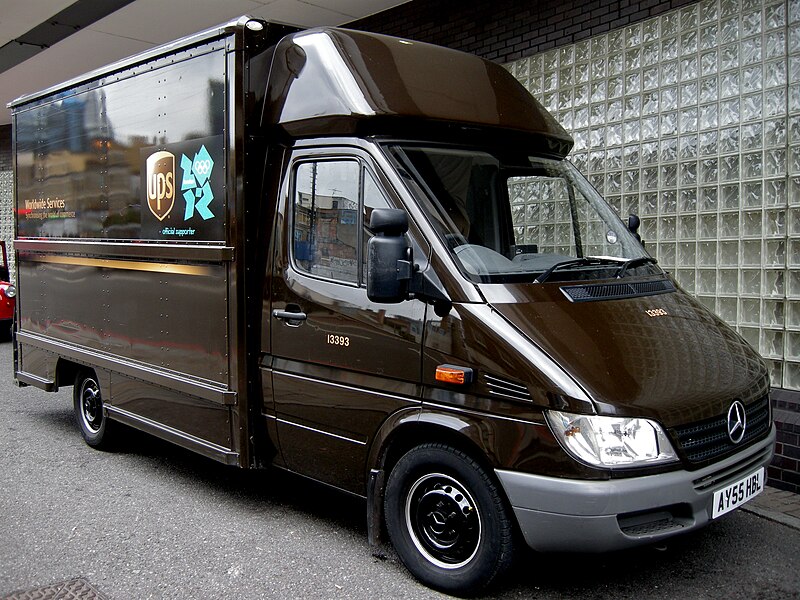
UPS announced their first quarter results this afternoon, citing a better than expected post-Christmas season and the surge in e-commerce as contributing factors to their 2.2% growth in revenue. Operating profit also increased by $100 million compared to the first quarter of 2012. The courier company delivered an average of 16.2 million packages per day in the January-March 2013, an increase of 4.1% on the previous year.

File:UPS UK Mercedes Sprinter.jpg
Image c/o UPS

The U.S. Domestic operation saw the greatest increases in revenue ($267 million) and operating profit ($90 million) of all branches of the organisation. International operations saw slight increases in revenue and average daily volume along with a 14% decrease in operating profit from $408 to $352 million. The Supply Chain and Freight branch of the business increased revenues by $200 million while profits fell by $20 million to $143 million. UPS cited overcapacity in trans-Pacific trade lanes as the reason for the decrease. 

UPS Chief Financial Officer Kurt Kuehn commented, "January started strong [and] the pace of growth for the remainder of the quarter was in line with our expectations." 

Source: UPS

Wednesday, 24 April 2013

Sending a parcel to the United States


The USA is one of the most popular destinations for parcel deliveries from the UK. If you've never sent a parcel to the States before, it’s easy to get overwhelmed by the range of delivery services available and the numerous regulations related to US imports. We've therefore compiled this list of handy guidelines to make your delivery to the US go as smoothly as possible, at the best possible price. 

File:Flag of the United States.svg

Cost
Given the sheer volume of imports to America every day, sending a parcel across the pond can be much more economical than you expect. For international delivery to the USA, our rates are amongst the most competitive around and start from less than £20 per single kg ranging to £2.29 per kg, depending on the weight of the parcel you want to send. Click here to get a quick quote.

Carrier
While cost is a huge factor in selecting which courier service to use, you should also consider which is the best carrier for your destination and delivery time frame. The American logistics giant UPS arguably has the best USA distribution network, but DHL, FedEx and TNT Express have expansive networks in the States as well. Our UPS Express Saver service has an average transit time of two days and is also our cheapest US service when sending parcels weighing up to 70kg. 

Customs
Import laws to the US are deliberately tough. Many of the relevant legislation is intended to crack down on illegal imports and to comply with recent anti-terrorism laws though, so the majority of commercial and personal parcels reach their destination without problems. If you're unsure as to whether or not your parcel is  acceptable by American customs, check our list of prohibited and restricted items. In addition to those items on our list, the US prohibits the importation of gambling devices, asbestos and ivory.

For further information, please call our customer services on 0845 145 1212 (Monday-Friday 9:00- 5:30 pm) or use our online live chat feature.


Monday, 22 April 2013

How do I package my parcel? Top tips for protecting your consignment


It’s simple enough: you want to send a parcel internationally, so you find a quality courier service, select a convenient collection time and make a booking. After you have printed off the appropriate documentation, and before your consignment is picked up by your preferred carrier, you need to give some thought to how to package your parcel correctly.

Packaging your parcel correctly is not difficult, but it’s important that you follow a few easy guidelines to ensure that your goods are protected in transit.  Worldwide courier services are massive operations, and while carriers should always endeavour to treat your parcels with care, remember that many stages of the transit process will be automated: your parcel is likely to pass through sortation centres using conveyors and chutes, parcels may be stacked and while ‘fragile’ labels may be useful for information purposes, they are no substitute for careful packaging.


You should think about two main areas when packaging your parcel: the shipping carton, or box, and how your contents are placed within it. Ask yourself the following questions:

The shipping carton:
  • Is it strong enough for the contents of my consignment? If applicable, do the contents weigh less than the maximum weight limit of the box? For heavy or valuable items, double layered cardboard is best.
  • Is it the right size for my consignment?
  • Is it in good condition? We all recognise the importance of going green. Reusing your boxes is commendable and great for the environment, but remember only to do so if a box remains in good condition.
Inside the shipping carton:
  • Is there sufficient cushioning material, such as bubble wrap, between each of my items, and between each item and the box edges? Most carriers recommend a minimum of 5 cm.
  • Are fragile or valuable items especially protected?
  • Are sharp edges fully protected? Fixed heavy cardboard is best for this.
  • Are small items packed into flyers?
  • Are liquids and semi-liquids or greasy substances stored in leak free containers?
If you can answer “yes” to each of these questions then your parcel has the best chance of arriving in perfect condition. For further information, visit our packaging advice webpage. Happy packing! 


Thursday, 8 March 2012

Tip: Send a Parcel to Australia from UK

Sending a parcel to Australia from the UK via courier? Many businesses have recognised the advantages that come with booking their parcel deliveries online. Not only does it save a lot of time but one can take advantage of reduced rates of up to 67% on international delivery charges.

Let us have a look at the benefits of using couriers for your parcel delivery to Australia:


parcel to australia1. Experience & Safety

Australia’s landscape and extensive road network connects coastal cities with desert lands, also known as the Outback. Today, a population of about 690,000 still live in Australia’s outback.

In order to delivery parcels to such isolated parts of Australia, courier drivers have to have a thorough knowledge of the desert and its road network.

Therefore many customers entrust their consignments with Australia’s very own TNT as well as DHL and UPS who are amongst the leading carriers to service this area.


2. Speed

With Perth bordering the Indian Ocean and Sydney being located on the south-east coast, parcel deliveries can easily take 1 to 2 weeks. Fortunately, the express parcel services offered by TNT, UPS or DHL make it possible to have your parcels delivered to anywhere in Australia within an estimated time of 3 to 4 working days.

Frequent direct flights from Australia’s major airport enable these couriers to service any area quickly and efficiently.


auz money3. Discounted Prices

Thanks to eCommerce courier companies, sending parcels to Australia no longer needs to be expensive.
As a business you can save more than 1/3 on international delivery rates when booking your parcel delivery online on Transglobal Premium.